« Don’t build a perfect product. Build a product people want to use.» – Reid Hoffman (Founder of LinkedIn)
Launching an app or a digital solution without testing your market is like going on an expedition without a map or a compass. You risk wasting time, money, and energy for an uncertain outcome.
That’s where MVP development (Minimum Viable Product) comes in — an approach that allows you to validate your idea quickly, at low cost, while staying focused on the most important thing: the user.
In this article, discover how to succeed at every step of creating a digital MVP, whether you’re an entrepreneur, startup, or project owner.
What Is an MVP (Minimum Viable Product)?
An MVP is the simplest, most functional version of your product, launched quickly on the market to test one or more key assumptions..
It’s not a “sloppy” product, but a strategic tool to:
- Verify market interest;
- Gather user feedback;
- Iterate before heavily investing in full-scale development.
In short, it’s the bridge between idea and reality — and the foundation of any successful agile launch strategy.. → See also: Why a well-written specifications document prevents app failures
Why Develop an MVP First?
Developing an MVP isn’t about wasting time — it’s about saving it.
Here are the 4 main advantages:
- Reduce initial development costs;
- Accelerate time-to-market;
- Collect concrete user feedback;
- Avoid building a useless or poorly aligned product.
It’s the best way to validate your business model before committing major technical, financial, or human resources.

The 7 Steps to Successful MVP Development
1. Clearly Identify the Problem to Solve
Every good MVP starts with a strong, well-defined user problem.
Ask yourself:
What specific frustration or need will your app solve — better than existing solutions?
Examples:
- “I waste too much time managing my tasks manually.”
- “I don’t know what clothes to buy online for my body type.”
2. Focus on a Single Priority Audience
An MVP is not meant to please everyone — it targets a well-defined segment of users: your early adopters.
Examples:
- Freelancers looking for simple invoicing tools
- Busy parents searching for quick recipes
Identify their needs, behaviors, and digital habits to deliver a targeted experience from the first version.
3. List Only Essential Features (and Nothing More)
An effective MVP relies on functional simplicity.Too often, people want to add dozens of features right away — leading to delays, bugs, and confusion.
Focus on the core promise.
Example for a booking app:
- MVP feature: booking + email confirmation
- Secondary features: loyalty program, reviews, in-app chat…
Use the MoSCoW method to prioritize: Must Have / Should Have / Could Have / Won’t Have.
4. Design a Simple, Intuitive Interface
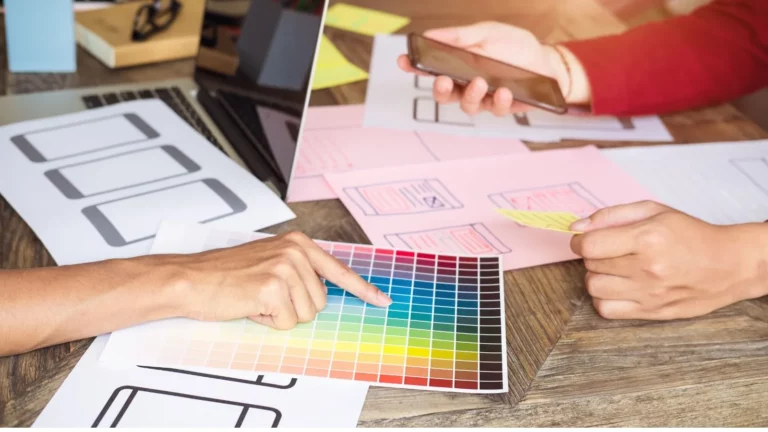
Your MVP design should be focused and user-friendly — without neglecting UX/UI.
- Smooth navigation
- Logical user flow
- Clean, uncluttered screens
Get inspired by Material Design principlesand create interactive mockups (wireframes) to test your concept early. → See also: Why UX/UI design is the key to user retention
5. Choose the Right Technology
Depending on your goals and budget, you can:
- Build a Progressive Web App (PWA); ;
- Go for native development (iOS, Android);
- Or start with a no-code / low-code solution like Bubble, Glide, or Webflow.
For an MVP, speed of execution matters most — the goal is to test an idea, not build a perfect architecture. → See also: Why custom development becomes profitable in the long run
6. Test Quickly with Real Users
Once your MVP is ready , put it in the hands of real testers.Not friends. Not colleagues. Real users.
- Gather feedback on UX, features, perceived value
- Analyze behaviors with tools like Hotjar or Mixpanel
- Fix major friction points
The more concrete the feedback, the better your next iteration will be.
7. Measure Key Success Metrics (KPIs)
Track relevant KPIs from launch, such as:
- Daily/weekly active users
- Retention rate
- Conversion rate (sign-ups, purchases, bookings…)
- Qualitative feedback
Set realistic goals and use the data to decide: continue, adjust, or pivot?

How Much Does MVP Development Cost?
MVP costs depend on:
- Functional scope
- Technology used
- Level of design customization
- Launch strategy
On average, expect €2,000 to €25,000 for a stable, testable, and scalable version.
An MVP Is Not a “Mini Product” — It’s a Strategy
Developing an MVP is the first real sign of commitment to your project. It’s a tool for validation, learning, and optimization.
Those who succeed are not the ones who “do more” — but the ones who start faster, with more clarity, more listening, and more method..
Want expert support to structure, design, and develop your MVP?
Request a free audit or contact our team.